A Change Is A Coming...

Have you ever had your flabbers gasted by a question or statement not directly intended for you?
Like, “That’s not for me…but it sounds like it’s sooo for me?!?! “🤔🧐…💭😮💨
MESSAGE…..✉️ ✉️ ✉️
Well… a few weeks ago, a TikTok post from Raquel Hopkins (who posts as @raquel_the_capacity_expert) aimed at therapy clients stopped me dead in my tracks, and it’s caused me to reckon with my approach to therapy ever since.
Ms. Hopkins presented 3 vital questions she thinks clients should be able to ask an existing or prospective therapist.
What do you believe brings about change in a person?
How will you know when I'm ready to leave therapy?
What skills do you hope I'll have, or be able to use, that I can't use now?
These questions are clear, and my answers are the same.
Yet, I noticed a gap between my authentic responses and how change, transition, and skill development are supported and structured in Nuanced Healing.
Addressing this gap and reconciling this incongruence led me to my good old friends… pen and paper! (Actually, several legal pads and at least 2.5 ballpoint pens by the time it was all said and done. 😬)
What follows are refined contents of those blessed legal pads.
First: my responses to these 3 critical questions
Second: The foundation of a blog series on Nuanced Healing's journey is being refined to better reflect its goals of empowering individuals, enabling genuine healing, and liberated transformation.
1️⃣ What do I believe brings about change?
Personal change… is just that… personal… and I’m not saying this to be difficult or obtuse.
My practice is named Nuanced Healing for a reason.
Each individual responds to the process of change in light of their unique situations, contextual realities, and internal and external resources. The same individual will also experience variations of ease and challenge when dealing with a specific change.
Change centers on authentically coming home to one’s genuine self through honesty, acceptance, and integration over and over and over again… (What can I say, appreciate the Jungians 🤷🏽♀️.)
In the therapeutic setting, I welcome an eclectic approach to facilitating change. One that centers on the client’s specific goals, current capacity, and their macro, mezzo, and micro life experiences. This looks like incorporating and synthesizing a number of change frameworks.
Below are the change theories I align with and utilize*** (all for different reasons and to differing degrees):
The Common Factors Theory: the therapeutic alliance (the bond between therapist and client) is the single most robust predictor of change, accounting for far more variance in outcomes than specific techniques.
Prochaska and DiClemente's Transtheoretical Model (TTM)*: health behavior change unfolds across 6 specific stages: Precontemplation, Contemplation, Preparation, Action, Maintenance, and Termination. (Some include Relapse as a stage.)
Neuroplasticity and Co-Regulation, the neuroscience of change: Hebbian plasticity and Stephen Porges' Polyvagal Theory suggest change happens by rewiring neural pathways and calming the nervous system. The adult brain can build healthier pathways by processing emotion and practicing new habits in calm, safe settings.
Relational Frame Theory (RFT): a psychological theory explaining how our minds create invisible webs of suffering by linking words to pain, like equating “aloneness” with “unlovable.” Instead of trying to change difficult thoughts, ACT (Acceptance and Commitment Therapy) helps us relate to them differently through mindfulness, acceptance, and actions aligned with our values. Change happens not by deleting thoughts, but by dropping the struggle and taking meaningful action.
Biosocial Theory and Dialectics, rooted in dialectical philosophy**: this theory explains that emotional dysregulation results from a biological vulnerability and an invalidating environment. It emphasizes that personal change occurs at the intersection of complete validation of who you are now and developing the skills to grow and improve.
Social Constructionism and Post-Structuralism: influenced by Michel Foucault, these see “problems” as products of dominant cultural stories, not internal pathologies. By viewing the person separately from the problem, clients identify moments of resistance, “Innovative Moments,” that help them shape a new, self-authored identity. Change occurs when they step outside their struggle's story and reframe their identity around their strengths.
Decolonized and Liberation Therapy: Liberation Psychology and Critical Race Theory emphasize that personal suffering is connected to systemic oppression, including white supremacy, capitalism, and colonialism. Healing happens when we shift from merely coping with a broken system to collective liberation, recognizing that anxiety and trauma are responses to larger harms. True change occurs when we view healing as part of a broader effort to transform society.
Each framework/theory has its benefits and limitations. I approach each with flexibility, as the most important component of all change is the person in front of me; their autonomy, identity, and self-determination.
* I see the stages of change as a way to help clients understand where they are in the process of changing. It isn't meant to help them become more aware of themselves or to build skills.
** A word on validation: Most folks come to therapy seeking relief from very real internal and external pain, distress, overwhelm, and trauma. The therapeutic space is rightly one of nonjudgmental validation and support.
Yet I diverge from the school of thought that validation alone (even when paired with circumstantial relief) will automatically lead to meaningful change.
Validation opens the door. It creates the safety that lets a person get curious about themselves without flinching. But validation without introspection and intentional action can leave a person feeling affirmed yet still stuck. More on that in the next post.
🧵🪡Common Threads of Change 🧵🪡
I have identified several fundamental factors that are essential to effecting meaningful change.
Clients usually reach out when they reach a place of Awareness that the status quo isn't tenable anymore. If rapport building finds its way to building genuine connection and Relational Safety (aka Therapeutic Alliance), clients are generally open to New information, a new experience, broader perspective, real psychoeducation, and curious about putting their life and distressing experiences into context.
And then, if a client is curious and courageous enough, a more challenging threshold appears: Clarity of intent, the point where one realizes change is going to fundamentally require something of you, more than putting difficult people in context or understanding your triggers. This is where people learn that having skills and becoming skilled are two very different things. It’s here that one determines exactly what they desire to achieve and who they need to be in the process.
The rest is less dramatic and more indispensable. The element of Time, more of it than estimated or desired. Change and transformation simply take time. Doing the simple and unsexy things like practicing those “coping skills” (everyone claims they want on intake forms… 🫤). Add in the brass tacks: Means, Measures, & Accountability: What change will feel and look like, and a clear sense of what one is actually willing to be held accountable for and to.
All of it is a process, and a Process of degrees. Those who commit to the depth and perseverance required for meaningful change and transformation come to discover that the journey continues because they are the journey.
2️⃣ How will I know when a client is ready to leave?*
* A question that requires a caveat
I was fortunate to have professors who emphasized that termination begins at intake.
This isn’t gleeful anticipation of the end of the therapeutic alliance; rather, it's a recognition that therapy has a beginning and an end. This strategic understanding honors the reality that ending a caring, supportive, and safe partnership will likely feel difficult, if not frightening.
Whether the alliance lasts months or years, a good ending isn't something you figure out in the last session. It's something you build toward from the first one. Ideally, a clinician and client collaboratively define what success will look like and the means to reach it, evaluate progress, and recalibrate as needed to reach “success”. When done well, such an ending can signify a great accomplishment, growth, and realized change.
For me, being 'ready' isn’t about eliminating every hard feeling; it’s about taking functional action. In that sense, readiness is visible in what happens beyond our sessions: Are you applying the insights and skills we've developed together outside this space, on your own, without me? Are you moving closer to the version of yourself that you aimed to become?
* Caveat: Therapy / The Medical Model / and Insurance
The US medical model requires a mental health diagnosis to justify care, i.e., to establish medical necessity. This process also involves treatment plans, potential utilization reviews, strict limits on session duration and reimbursement, and generally an approach to therapy that prioritizes returning a client to “prior functioning” as quickly as possible.
An applicable and relevant diagnosis can be useful in treatment, and at the same time, I, like many clinicians, didn’t enter this field to work with diagnoses over working with human beings. And even when one has successfully returned to “prior functioning” and symptom alleviation, a client may still be seeking deeper healing and transformative change.
In such circumstances, termination can be complicated if not encumbered. (But more on this later in this blog series)
3️⃣ What skills do I hope clients walk away with?
Each client I encounter deserves to cultivate genuine autonomy, personal empowerment, authentic healing, and liberated transformation. If I had to narrow it down to 4 skills I believe are key in attaining the aforementioned realities, they would be:
Psychological flexibility, the ability to hold challenging and distressing thoughts or feelings without needing to fix or flee them immediately, which I think of as the real entry point to becoming more fully yourself.
Equanimity, maintaining an internal steadiness, psychological stability, and objective clarity that doesn't require the outside world to cooperate first.
Critical consciousness, the ability to see clearly how the systems and stories around you have shaped what you believe about yourself, without using that clarity as an excuse to stay stuck.
Self-compassionate accountability, which is exactly what it sounds like: holding yourself to your own standards without turning every misstep into evidence against your worth.
*Bonus Perspective Taking, the cognitive and social ability to observe and evaluate events, situations, and interactions from another’s perspective without the need to judge or agree.
These 4 (+ 1) skills equip an individual to be the captain of their own ship. Not therapist approval. Not a diagnosis. An internal compass one can trust, built and tested with support, that keeps working long after our sessions end.
Why I'm sharing this now
Ms. Hopkins’ post was a real wake-up call! 📱⏰
The gap between my authentic answers and my actual practice demanded a reckoning.
This midsummer revelation is the result. Being a therapist in 2026 feels perilous. No, for real! As privileged as I am to do this work, it’s also a terrifying tightrope walk at times. Yet maintaining the status quo out of an abundance of caution carries its own cost.
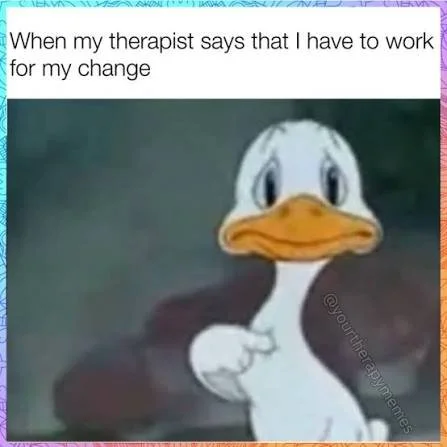
Customer is always right culture + Psychotherapy culture = “venabling” (my word for validating to the point of enabling)
The need for therapy and mental health support is growing, with social media and tech companies playing a larger role in providing access. Each benefits from positioning psychotherapy as a caring profession, heavy on caring and extra light on profession (read: business). “Good” Therapy and therapists are presented as all “higher callings,” cardigans, care, Kleenex, and selfless service providers… And in the US service industry, the customer (read: client) is always right. This “service delivery ” expectation tends to foster a passive / consumer dynamic within the therapeutic relationship that shows up like this:
I, 🙋♀️ (the client), make time for the session 📆. ⬇️,
I pay my copay 💵. ⬇️,
you, 👩🏻🏫 (the therapist) give me (🙋♀️) therapy🗣️ 👂🤲🧰 🔮. ⬇️
**If you (👩🏻🏫) provide it (therapy)🗣️ 👂🤲🧰 🔮 to me (🙋♀️)“correctly” ⬇️
I, 🙋♀️, feel better ❤️🩹 👏
And if the service/therapy delivery doesn’t go well… aka the client isn’t feeling better and quickly, that’s just poor customer service.
“What do you mean Oprah-esque “ah ha moments” aren’t the key to deep trauma healing and self-actualization… smh? You better get better at your inspirationalism, Mr. or Ms. Therapy Provider! “

I heard someone describe bibliotherapy as elitist… … no real explanation or nuance… just elitist. smh
Bibliotherapy Elitist?
Being honest and direct about the true “work” of therapy and the commitment needed for genuine lasting change is often viewed as distasteful at best and sacrilegious at worst. Focusing on collaboration, the natural discomfort of growth, openness and willingness toward new ideas, addressing thought patterns, and regularly practicing somatics… hell, practicing anything at all is often deemed a line too far.
Seriously discussing therapy “homework” to the wrong person might land a therapist as the subject of a modern-day Dateline special, aka a 34-part TikTok story time… smh 🤦🏽♀️.**
Ms. Hopkins reminded me that Nuanced Healing was born of my genuine belief in the individual’s unique and amazing capacity for change, healing, and transformation. One need not be perfect or have it all figured out to be collaborative, brave, curious, bold, and committed. Validation, emotional support, and co-regulation are important and necessary components of the healing process. It’s also a rare and powerful privilege to collaborate with those who want to go deeper, who want to evolve and transform into beings who seek to become “skillful emotional and psychological sailors” just as much as they desire “smooth relational and situational sailing”.
** These observations are NOT in reference or relation to genuine ethical violations, clinical or clinician abuse, neglect, or malfeasance.
That's what took me so long to say plainly. In the name of balancing compassionate care, the predominant medical model, blanket societal misconceptions about the profession, and the “emotional comfort and vibes over everything” therapy culture, I’ve obscured what I know to be true about change. Therapy is often oversimplified as simply showing up and talking, implying that attendance is the entire treatment. Attending sessions is a meaningful first step, but it is only a prerequisite, not the final goal, for the active, structured work that facilitates real transformation. I will explain what this structural evolution involves at Nuanced Healing in upcoming pieces.
For now, I'd rather leave you with this: you’re not only allowed but encouraged to ask any therapist, current or prospective, these 3 questions. And expect a real, thoughtful answer. If a provider can't explain what they believe brings about change, how they’ll know you’re progressing and achieving success, and what you’re both actually working toward, that's information, too. I had to ask myself first. I think you deserve a therapist willing to answer the same questions and to practice in alignment with those answers!
Feeling brave? Have questions that need answers?
Book a free consultation and let's talk.
***Updated August 28th, 2026:
In the original post, I lacked clarity on some points and need to address a few items. When I mentioned clients identifying “Innovative Moments,” I referred to the clinical concept known as “unique outcomes” in the White and Epston tradition. The term “innovative moments” actually comes from later process research that expanded on this idea (Gonçalves et al., 2009; White & Epston, 1990). Polyvagal Theory is best understood as a framework proposed by Porges (2011), not an established area of neuroscience; some ideas are debated in the scientific community (Grossman, 2023), but the science behind the nervous system’s ability to self-regulate and collaborate is well-founded. Regarding the therapeutic alliance: the most thorough research shows it is one of the strongest predictors of therapy success, more than specific techniques (Flückiger et al., 2018; Wampold, 2015). None of these points change what I shared. I’m just demonstrating my work, which is the transparency I expect from any responding therapist questions.
References:
Flückiger, C., Del Re, A. C., Wampold, B. E., & Horvath, A. O. (2018). The alliance in adult psychotherapy: A meta-analytic synthesis. Psychotherapy, 55(4), 316–340. https://doi.org/10.1037/pst0000172
Gonçalves, M. M., Matos, M., & Santos, A. (2009). Narrative therapy and the nature of "innovative moments" in the construction of change. Journal of Constructivist Psychology, 22(1), 1–23. https://doi.org/10.1080/10720530802500748
Grossman, P. (2023). Fundamental challenges and likely refutations of the five basic premises of the polyvagal theory. Biological Psychology, 180, Article 108589. https://doi.org/10.1016/j.biopsycho.2023.108589
Porges, S. W. (2011). The polyvagal theory: Neurophysiological foundations of emotions, attachment, communication, and self-regulation. W. W. Norton.
Wampold, B. E. (2015). How important are the common factors in psychotherapy? An update. World Psychiatry, 14(3), 270–277. https://doi.org/10.1002/wps.20238
White, M., & Epston, D. (1990). Narrative means to therapeutic ends. W. W. Norton